


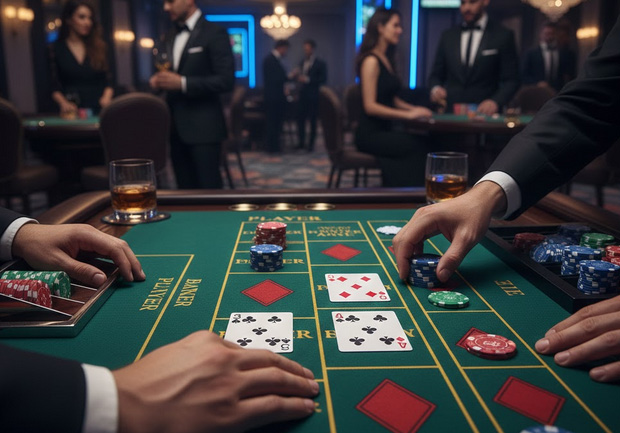
The global popularity of online baccarat: a classic game with a trusted reputation
Baccarat is more than just a card game – it’s a true symbol of gambling tradition, one that has survived for centuries and earned millions of fans, from European salons to Asian casinos. Its appeal lies in its simplicity: you sit at the table, place your bet, and let the cards tell the story. With the rise of baccarat online, even more players have discovered and come to love the game. Users appreciate its balance of luck and light strategy. It doesn’t overwhelm you with complex calculations or require deep mathematical knowledge – it stays elegant, straightforward, and endlessly engaging.
The origins of baccarat: from medieval Italy to global casinos
Picture this: 15th-century Italy, where a man named Felix Falguiere takes old tarot cards and invents a game in which zero becomes the key to winning. The word baccara literally means “zero,” since tens and face cards hold no value. From Italy, the game drifted into France, where aristocrats in silk waistcoats played a variant in which any player could act as the banker.
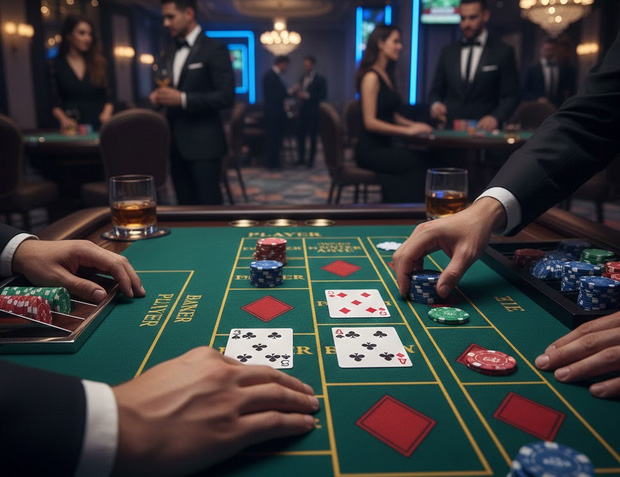
By the 19th century, baccarat had firmly established itself in Monte Carlo, becoming one of the casino’s signature attractions. Later, through Cuba, it made its way to the United States as punto banco – a fully automated, decision-free version. Today, this is the standard: in Las Vegas, baccarat generates around 18% of casino revenue, while in Macau it accounts for as much as 85%.
Its evolution turned it into a universal format, from exclusive high-roller rooms with million-dollar bets to accessible mini-tables for everyday players. Without this transformation, baccarat would have remained nothing more than a museum artifact.
How to play: rules you can learn in a single round
Two hands – the “Player” and the “Banker” – each receive two cards face down. Scoring is straightforward: Aces count as 1, cards 2–9 keep their face value, and tens and face cards count as 0. If the total exceeds 9, subtract 10. The hand closest to 9 wins; a tie returns all bets. A third card may be drawn based on strict rules: the Banker always draws on 0–2, and on 3–6 depending on the Player’s third card. No bluffs, no decisions – just pure luck. There are three betting options: Player – pays 1:1 with a 1.24% house edge. Banker – pays 1:1 minus a 5% commission, with a 1.06% house edge. Tie – pays 8:1 or 9:1, but comes with a 14.36% house edge – a classic trap for beginners. In mini-baccarat, the dealer handles everything, and each round takes about a minute. In online speed versions, it’s just 27 seconds of adrenaline. Simplicity is baccarat’s greatest strength: sit down, place your bet, and walk away with a profit — or at least a story.
Odds, strategies, and a smart betting chart
| Bet | Payout | House edge | Chance of winning | Profit example ($100 bet) |
| Banker | 0,95:1 | 1,06 % | 45,86 % | $95 minus commission |
| Player | 1:1 | 1,24 % | 44,62 % | $100 net |
| Draw | 8:1 | 14,36 % | 9,52 % | $800, but rare |
| Dragon Bonus | up to 30:1 | 2-10 % | Varies | High risk/high reward |
Game variants: choose your own pace
Baccarat hasn’t stayed still – it has evolved into multiple forms to suit different tastes. Here are the key ones:
- Punto Banco – the classic casino version, with the dealer in full control; bets range from small amounts to millions.
- Chemin de Fer – French flair: players take turns as the Banker and decide on drawing the third card themselves.
- Baccarat Banque – one Banker handles the entire shoe, while bets are rotated among players.
- Mini-Baccarat – faster, cheaper, perfect for busy casino floors or online play.
- No Commission – the Banker’s 5% commission is removed, but ties pay 1:1 instead of 8:1.
These options let you experiment: want strategy? Try Chemin de Fer. Want to relax? Stick with Punto Banco.
Global hype: Asia and Singapore
In many Asian countries, baccarat has long been a cornerstone of the casino industry. In Macau, it generates the majority of casino revenue, and this trend has remained steady for years. The mass market continues to grow, with revenue projections reaching tens of billions of dollars. But it’s not just about the money – baccarat holds a significant place in people’s lives. For many in the region, the game goes far beyond simple entertainment.
Singapore stands out as a leader. In local culture, baccarat is seen as a game with character and tradition. Major casinos feature hundreds of tables, almost always fully occupied. Players aren’t just chasing luck; for them, it’s a familiar ritual, a way to spend an evening calmly and focused. Regulators closely monitor side bets to ensure fairness and maintain high levels of trust. In this region, baccarat has become an integral part of life – and the online version lets you experience this unique atmosphere for yourself.
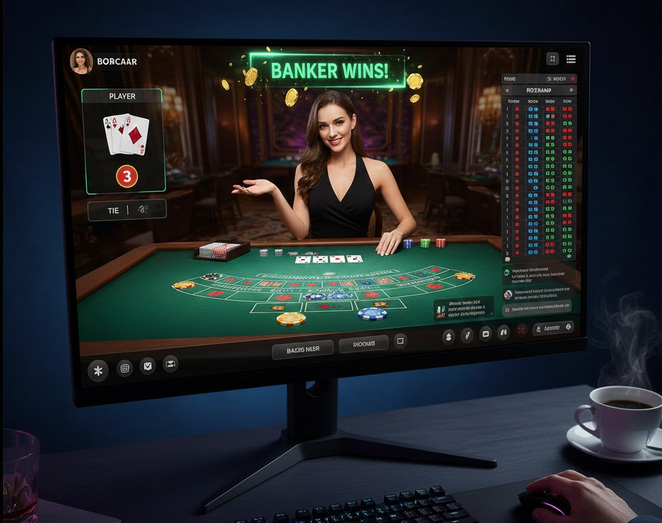
The Future of baccarat
Developers are already incorporating AI systems that adjust the pace and bonuses based on player habits, while side bets are being transformed into small mechanics that don’t disrupt the core gameplay. The influence of the Asian market is particularly notable. Interest in live tables continues to grow steadily by about ten percent each year, pushing studios to enhance mobile formats and make the game more personalized.
At the same time, players’ iconic habits remain. People still bring red talismans, touch the cards before they are revealed, and perform small rituals that create a sense of order.
Beginners are advised to take their time, start with demo versions, and gradually learn the rules for drawing a third card. This approach helps players feel the game rather than just pressing buttons. Baccarat will continue to balance tradition and technology, offering a calm rhythm, a touch of risk, and the very atmosphere that keeps players returning to the tables again and again.

SweepStars 26/03/2026
It’s interesting how a classic like baccarat stays popular across the world, even in modern social formats. The game feels simple, but the real part is how players manage their own play rhythm over time. I noticed similar thoughts when looking at SweepStars , where people talk about how easy it is to stay in that smooth flow without thinking much. Even with a trusted game style, the key is still awareness, not just the process.