


Staying Online in Malaysia: The Traveler’s Guide to Mobile Data
Malaysia is one of Southeast Asia’s most rewarding destinations to travel, precisely because it packs so much variety into one trip. In a single week you might wander the street-art lanes of George Town, ride the glass elevator up a Kuala Lumpur skyscraper, sip tea in the misty Cameron Highlands, and snorkel off an island in the South China Sea. Tying all of that together — the grab rides, the train bookings, the restaurant reservations, the group chats — is a steady mobile data connection.
Malaysia makes staying connected relatively easy, with strong networks and affordable data by global standards. Still, a little planning helps you avoid slow starts and surprise bills. Here is how to keep your phone online from the moment you touch down.
Malaysia’s Mobile Networks at a Glance
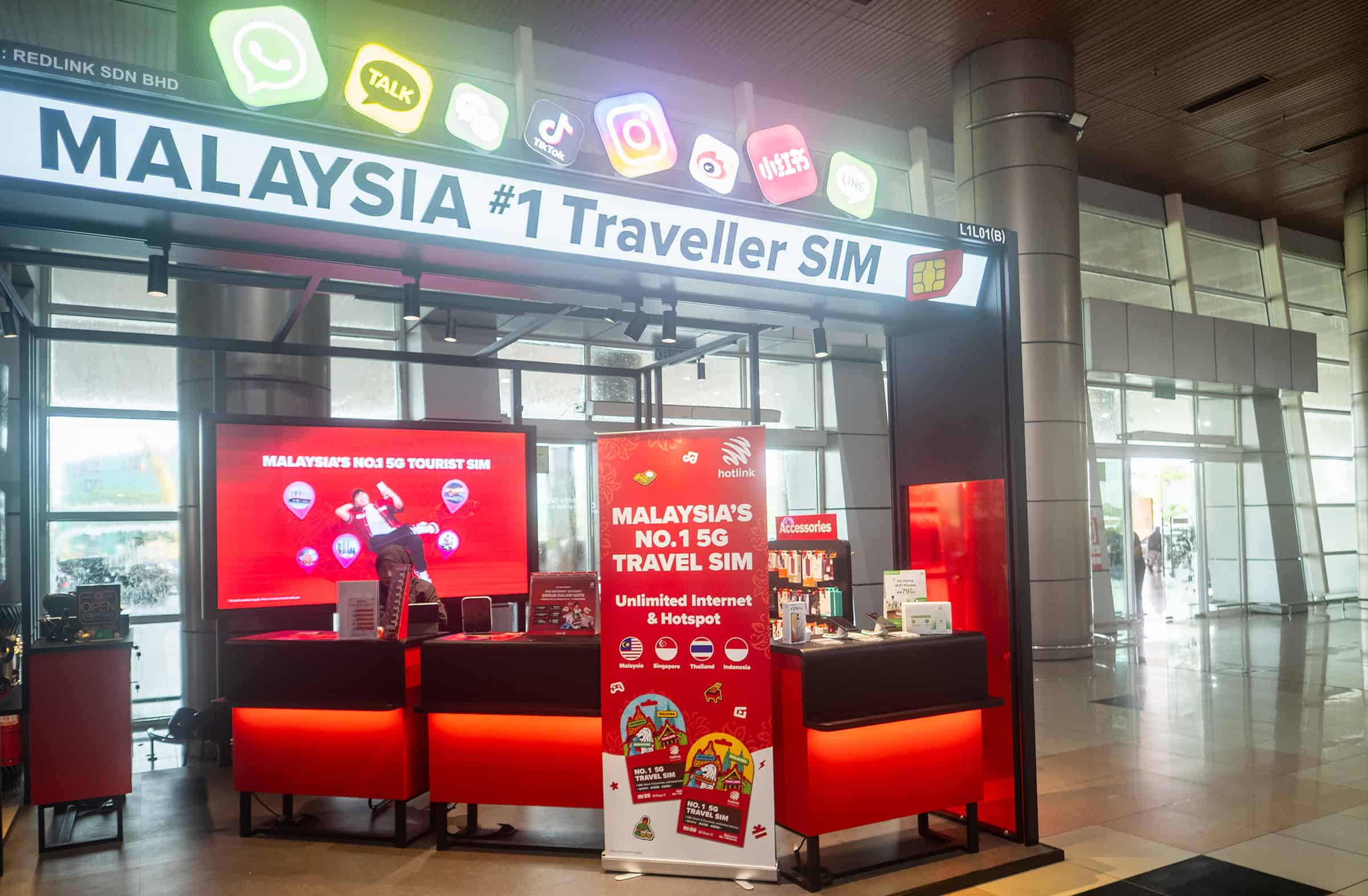
The market is led by a handful of major operators: Maxis, CelcomDigi (the result of a large merger), and U Mobile. Across Peninsular Malaysia — Kuala Lumpur, Penang, Melaka, Johor Bahru, and the well-traveled corridors between them — 4G is fast and 5G is expanding quickly. You will have little trouble streaming, video calling, or working from a cafe in most urban areas.
East Malaysia — the states of Sabah and Sarawak on Borneo — is a different story once you leave the main cities of Kota Kinabalu and Kuching. Coverage thins out in the rainforest interior, around national parks, and on remote islands. Maxis and CelcomDigi tend to have the widest reach, so they are worth prioritizing if Borneo’s wild corners are on your itinerary.
Local SIM, Pocket Wi-Fi, or eSIM?
Travelers essentially have three ways to get online. A local prepaid SIM is cheap and widely available at the airport and convenience stores, but it means swapping out your home SIM, and Malaysia requires registration with your passport. A pocket Wi-Fi device can share a connection across several gadgets and travel companions, but it is one more thing to rent, charge, carry, and return — and if it runs out of battery, everyone is offline at once.
The third option, an eSIM, has quietly become the favorite for independent travelers on shorter trips, and it is worth understanding why.
Why eSIMs Are Winning for Short Trips
An eSIM is a digital SIM already built into most recent smartphones. Instead of hunting for a shop and swapping a tiny plastic card, you buy a plan online, scan a QR code, and connect to a Malaysian network automatically. Your usual number stays active for calls and texts, while the eSIM quietly handles your data in the background.
That convenience is the whole appeal: with a travel eSIM like Cellesim, you can buy and install a Malaysia data plan before you leave home, then step off the plane at KLIA already connected — no airport kiosk, no passport paperwork at a counter, no downtime while you figure out top-ups. For a week or two of travel, that head start is hard to beat, and it is the main reason eSIMs have taken off among frequent travelers.
How Much Data Should You Plan For?
Your needs depend on how you travel. Light users who mostly rely on maps, messaging, ride-hailing, and the occasional search will comfortably get by on around 500 MB to 1 GB a day. If you stream music and video, post plenty of photos and stories, or work remotely from cafes, plan for 2 GB or more daily.
For a typical one-week Malaysia trip, a plan in the 5 to 10 GB range strikes a good balance for most sightseers, and comparing an eSIM data plan before you fly makes it easy to pick the right size up front. Digital nomads and long-stay travelers should look at bigger bundles so a heavy day of uploads or video calls does not leave them rationing data by Friday.
Staying Connected Beyond the Cities
Malaysia’s best moments often happen away from the skyline. In the Cameron Highlands, on the Perhentian and Redang islands, or deep in Borneo’s Kinabatangan River region, signal can be weak or absent. Prepare the same way you would for any off-grid stretch: download offline maps, save your accommodation details and transport times, and sync anything important while you still have strong coverage.
A power bank is essential, especially on long travel days and island trips where outlets are scarce. And while many hotels, cafes, and dive resorts offer Wi-Fi, speeds are unpredictable, so treat it as a helpful extra rather than something to rely on for anything time-sensitive like check-ins or bookings.
Data for the Way You Actually Travel
The reason connectivity matters so much in Malaysia is that so many of the things that make a trip smooth now live on your phone. Grab is the default for getting around cities and hopping between neighborhoods, and it needs data to hail a ride and track it. Train travel on the comfortable KTM and ETS lines is easiest to book and manage online, food discovery apps point you toward the best char kuey teow in Penang or nasi lemak in KL, and messaging apps keep you coordinated with travel companions across a busy itinerary.
On top of that, there are the everyday conveniences: mobile maps for navigating George Town’s maze of lanes, quick currency conversions at the market, reviews before you commit to a tour operator, and the ability to look up opening hours before you trek across town to a museum or temple. None of these are dramatic on their own, but together they are the difference between a trip that flows and one that stalls every time you need to figure something out.
Getting Online in Minutes: The Practical Setup
One of the underrated advantages of sorting connectivity in advance is how little of your trip it consumes. With a physical SIM, you are at the mercy of shop hours, queues, and registration processing. With an eSIM, the setup happens on your own schedule: you buy your plan, receive a QR code, scan it into your phone’s settings, and label the line so you know which is which. Most people finish the whole process in under five minutes, often the night before departure while still at home.
When you land, there is nothing left to do but toggle the data line on. No tray tool, no fumbling with a spare card, no standing at a counter translating a registration form. For travelers arriving late at night, or connecting straight onto a domestic flight to Langkawi or Kota Kinabalu, that seamlessness is worth a great deal — you step off the plane already able to summon a Grab or message your hotel.
What About Roaming?
It is tempting to just switch on roaming and deal with connectivity later, and for a very short layover that can be fine. But standard international roaming rates remain the most expensive way to get online in Malaysia by a wide margin, and it is easy to rack up a startling bill without realizing it, especially if background apps keep updating. Unless your home carrier offers a genuinely cheap travel add-on, treat roaming as an emergency fallback rather than a plan, and switch it off in your settings so nothing sneaks through.
A Note on Coverage Maps and Realistic Expectations
Every network publishes a coverage map, and they are useful for a general sense of where signal is strong. Just read them with a grain of salt: real-world performance depends on terrain, weather, how busy the local towers are, and where exactly you are standing. Dense jungle, mountainous interior, and small offshore islands will always be more variable than a city center, regardless of which provider you choose. The practical takeaway is to prepare for gaps rather than expect flawless coverage everywhere, and to lean on offline backups when you venture into Malaysia’s wilder corners.
Wrapping Up
From the food courts of Kuala Lumpur to the reefs off Sabah, Malaysia is a country that invites you to keep moving and keep exploring — and a dependable connection is what makes that easy and stress-free. Decide on your approach before you arrive, whether that is a registered local SIM or a ready-to-go travel eSIM, and you will spend less time troubleshooting signal and more time soaking up one of Asia’s most underrated destinations. Selamat datang, and enjoy the journey.
Keep Exploring Malaysia
-
 Staying Connected in Malaysia in 2026
-
 Seamless Journeys: The Ultimate Guide to Modern Transit and Portable Entertainment in Malaysia
-
 Prevent the Exhausting How to Have a Pleasant Trip in Malacca
-
 How to Compare Room Rentals for Best Value
-
 Why Southeast Asia offers some of the most rewarding travel experiences
-
 Pre-Trip Slots: Online Gaming Before Malaysia Vacations
10.0.0.1 Piso WiFi pause 05/09/2026
The explanation about https://10001ip.net.co/is quite helpful for beginners. I like that the information focuses on how the pause feature works and when it can be useful for managing internet access on a shared Piso WiFi network.
Gavin Prescott 29/07/2026
This is a really useful guide for anyone planning a trip to Malaysia. Having reliable mobile data can make navigation, communication, and travel planning much easier. I was also exploring https://wataugacountypropertyappraiser.org recently and it offered well organized public property information. Thanks for sharing these helpful travel tips and they’ll definitely make future trips more convenient.
Theodore Nash 29/07/2026
Great guide for having reliable mobile data makes traveling much easier, especially for navigation, bookings, and staying in touch. I was also checking https://citruscountycourt.org today and it was a useful resource for finding public records online. Thanks for sharing these practical travel tips for anyone visiting Malaysia.
Nora Sullivan 28/07/2026
This is a really useful guide for anyone planning to visit Malaysia. Having reliable mobile data makes navigation, communication, and travel much easier. I also recently found https://bibbcountycourt.org while looking for public record information and it was quite helpful. Thanks for sharing these practical travel tips.
Aaliyahcarter 09/07/2026
Great guide for anyone visiting Malaysia! Having reliable mobile data really makes it easier to navigate, book transportation, and stay connected throughout the trip. I also like keeping useful travel and location resources organized, and https://rabuncountypropertyappraiser.org is one example of an online reference I’ve found helpful for property-related information. Thanks for sharing these practical tips—they’ll definitely help travelers avoid connectivity issues.