


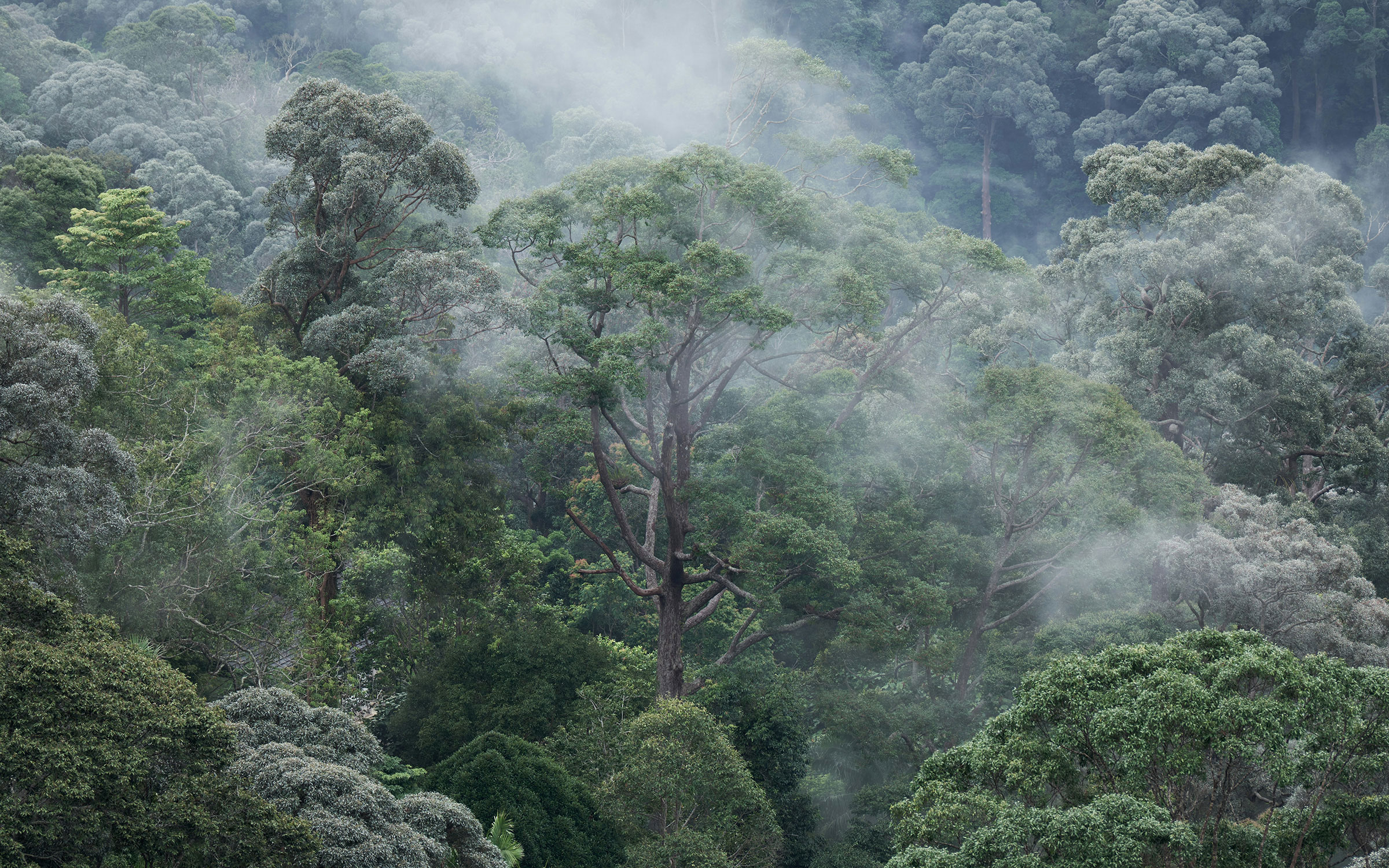
Why Malaysian Borneo remains one of Southeast Asia’s last true wildlife frontiers
At the edge of Southeast Asia, Malaysian Borneo holds a kind of wildness that’s difficult to put into words — a place where the forest feels ancient, the rivers move with their own quiet authority, and wildlife still shapes the rhythm of daily life. Visitors often arrive expecting a typical rainforest experience, only to realise that Borneo works on an entirely different scale. And as more people begin exploring wildlife holidays in Borneo through resources such as Experience Travel Group, it becomes clear just how many encounters here are shaped not by human design but by the landscape itself.
What sets this region apart isn’t just the animals — though orangutans, pygmy elephants, and hornbills are unforgettable in their own right. It’s the way the forest itself creates moments that you won’t find elsewhere in Asia: a rustle above the canopy that turns out to be a gliding mammal, a chorus of nocturnal calls rising as the air cools, or a sudden ripple on a riverbank that signals something quietly watching from the trees. Experiences here tend to happen on their own terms, almost as if Borneo is deciding when to reveal itself.
The scale of rainforest that still feels ancient
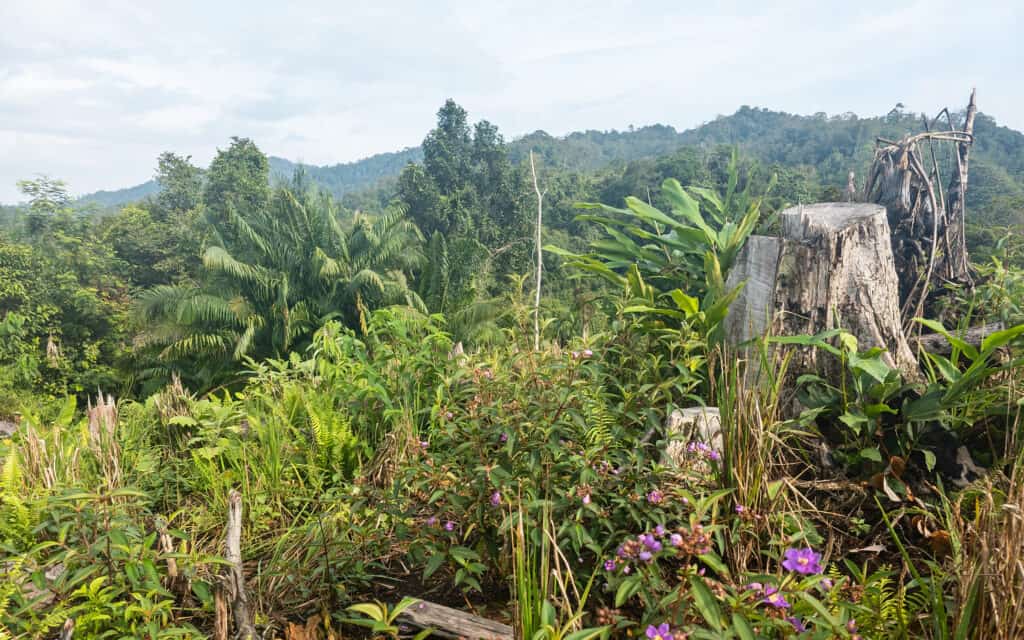
Much of Southeast Asia has changed quickly over the last few decades, reshaped by cities, agriculture, and tourism. Malaysian Borneo has not escaped change, of course, but what remains is still extraordinary. There are places — Danum Valley, Tabin, the interior forests of Sabah — where you step into lowland rainforest that has been growing, layer by layer, for millions of years.
And you feel it almost instantly.
The canopy seems to hang in slow, heavy drapes. The air folds around you in a way that makes sound feel softer. Even the sunlight arrives differently, filtering down through leaves the size of your arm.
These forests are not curated for visitors. They’re not structured in a way that guarantees sightings. You don’t walk in expecting wildlife to appear on cue. You go because you understand — or you’re trying to understand — that this is one of the last places in the region where forest ecosystems still feel like forest ecosystems.
There’s a humility to that. A reminder that wild spaces don’t exist for our convenience.
Rivers that behave like highways for wildlife
In Borneo, rivers do more than wind through the land; they connect everything. The Kinabatangan River, for example, is often described as one of the most wildlife-rich corridors in Southeast Asia. But that phrase barely scratches the surface. What makes the river remarkable is how it allows animals to move freely, following ancient routes between feeding grounds, water sources, and patches of forest that still hold fruiting trees.
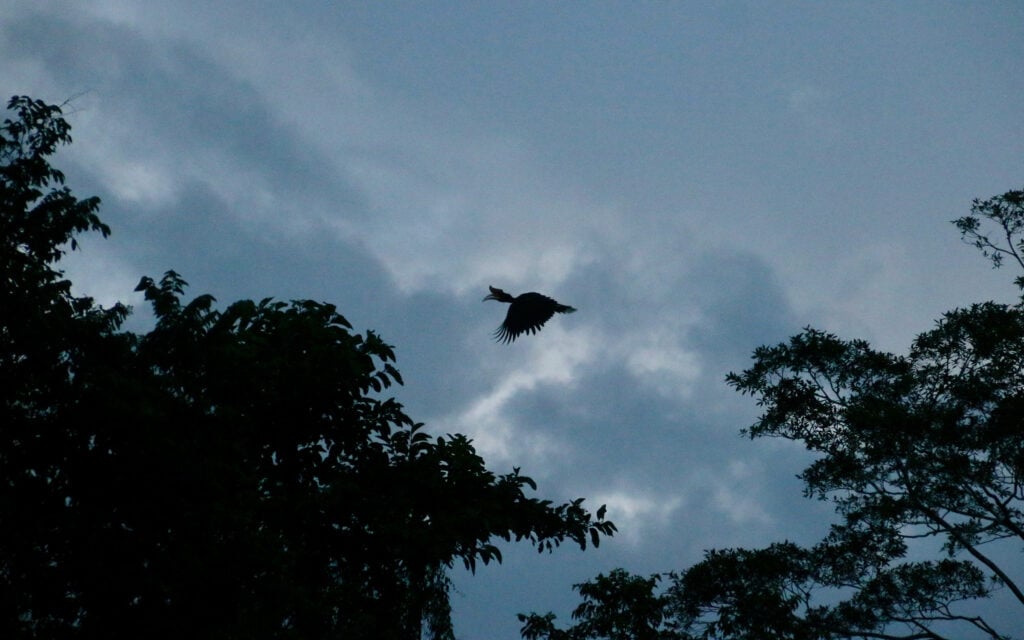
Travellers drifting along the riverbanks often talk about how alive the margins feel. Hornbills crossing overhead in uneven arcs. Proboscis monkeys dropping into the water with an unexpected ease. Small ripples that turn out to be crocodiles, or if the timing is right, the soft movements of pygmy elephants navigating the edges of the forest.
Nothing here feels staged. There are no platforms, no fixed schedules, no guarantee of what will appear. The river reminds you — gently — that wildlife encounters happen on wildlife terms.
And in a world where structured experiences dominate travel, that unpredictability feels refreshing. Almost necessary.
Species that define Borneo’s reputation as a frontier
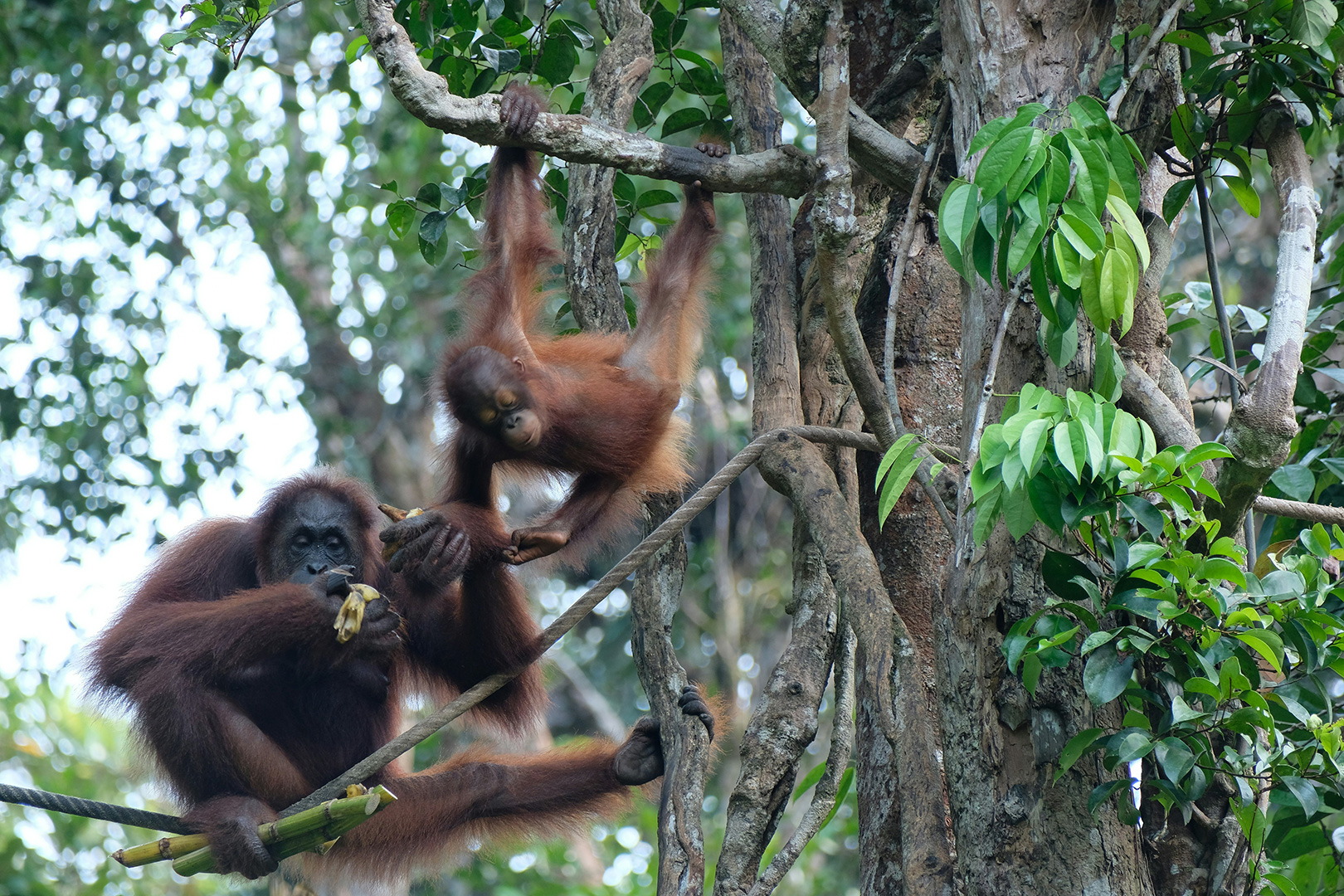
Orangutans
There’s something disarming about seeing an orangutan in its natural habitat. They move with a kind of unhurried precision, as if they’re measuring every branch before trusting it. Encounters often happen in silence: a shape in the trees, the rustle of leaves, a flash of orange against deep green.
They are not performers. They don’t linger for attention. They simply continue their day, and you feel — briefly — like you’ve stepped into their world rather than the other way around.
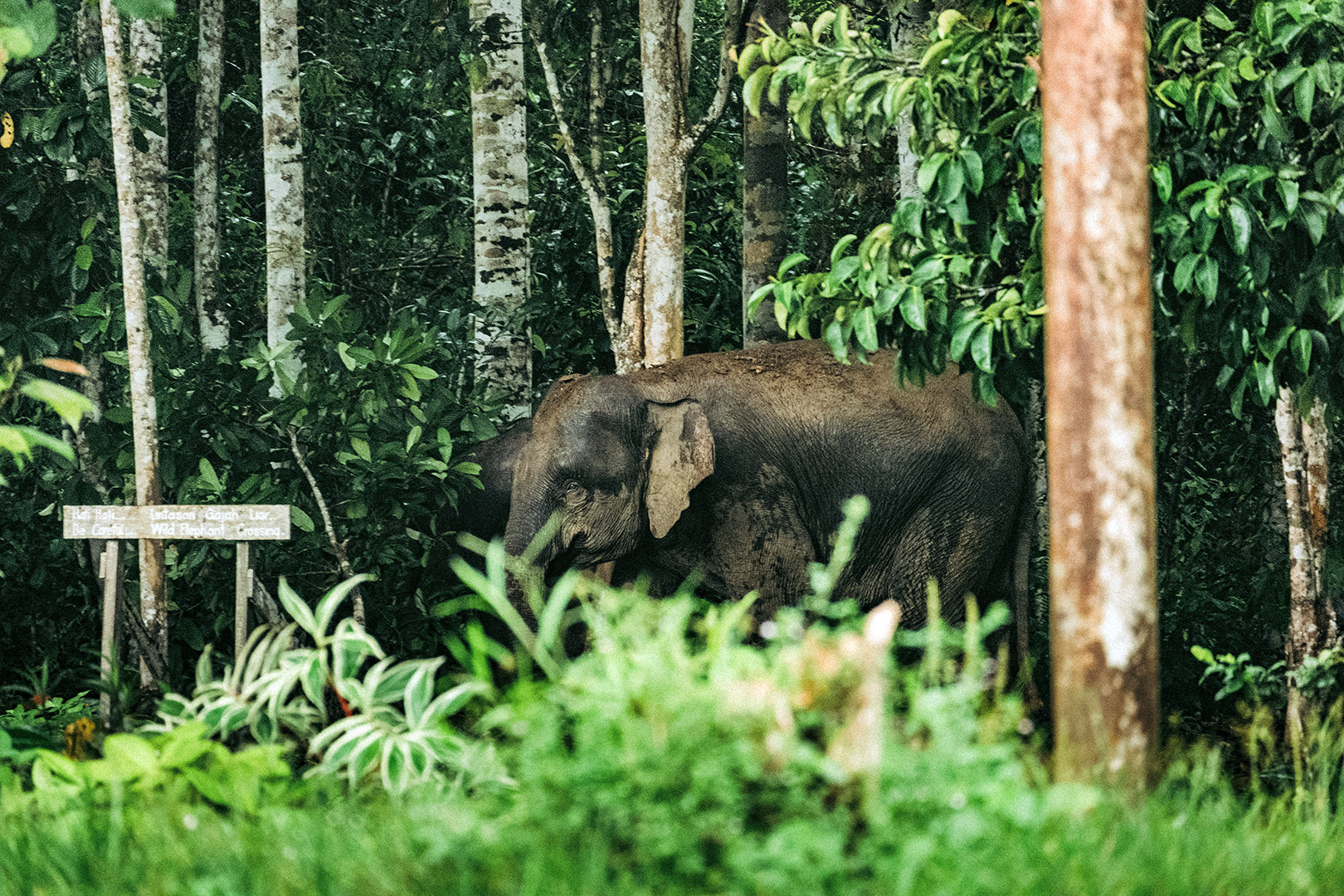
Pygmy elephants
These elephants are one of Borneo’s most surprising species, partly because they don’t behave like elephants elsewhere. They travel in quieter herds, moving along river systems and forest edges, often appearing and disappearing with little warning. Their gentleness is something travellers remember, that slightly hesitant look, those rounded features.
Hornbills
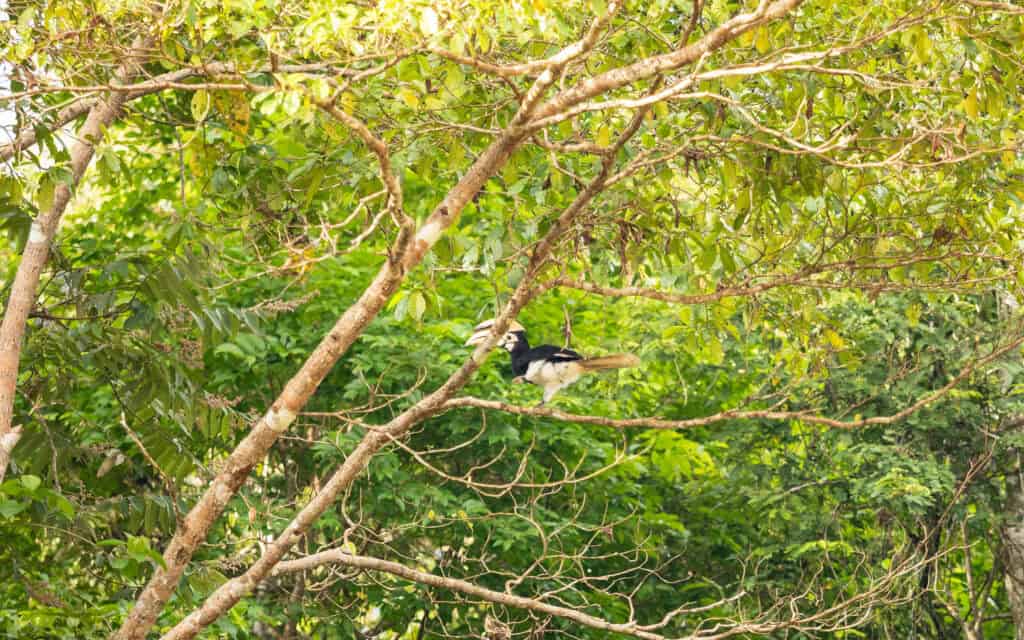
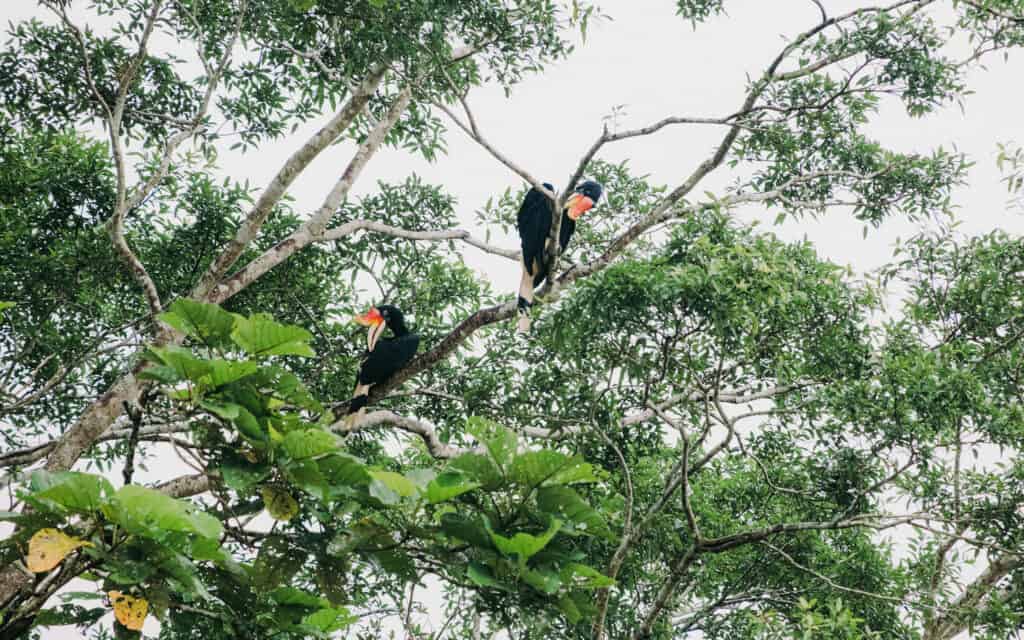
To see a hornbill is to understand why birds matter to rainforest ecosystems. The sound of their wings — a deep, windy whoosh — feels almost larger than the bird itself. Some species are endemic to Borneo, found nowhere else in the world. Their presence is a sign of forest health, a reminder that when the canopy thrives, everything else thrives with it.
River wildlife
At night, the rivers reveal a different cast entirely: owls, civets, crocodiles gliding with barely a ripple. It’s a world that doesn’t sleep in the way we expect. And that continuity — the sense that life keeps moving regardless of who is watching — is what makes the frontier feel intact.
Protected areas that still feel genuinely wild
Many protected areas around the world feel like versions of themselves, softened for accessibility. Borneo has a few of these too, of course, but its most important wildlife regions retain a sense of remoteness.
Danum Valley is perhaps the clearest example. Scientists have studied its untouched rainforest for decades, yet the valley still feels like a place that holds more than it reveals. Walks here involve sounds you can’t immediately identify, layers of green you can’t name, and the occasional reminder that you’re walking inside one of the planet’s richest ecosystems.
Tabin Wildlife Reserve offers a slightly different mood — more open spaces, mud volcanoes, and a sense that the forest is shifting around you. Then you step into the interior regions of Sabah and Sarawak, where communities live close to the land and forest cycles shape daily life.
None of these places feel manicured. And that, in itself, is rare.
Encounters shaped by natural rhythms, not schedules
One of the reasons Malaysian Borneo still feels like a true wildlife frontier is that travel here requires a willingness to adjust to nature’s timing.
Fruit seasons determine orangutan movements. River levels influence sightings of pygmy elephants. Weather shifts shape bird activity. Some moments happen quickly — a hornbill passing overhead. Others unfold slowly — the long wait for a primate to emerge from the canopy.
Travellers sometimes expect certainty, especially with wildlife. But in Borneo, uncertainty is part of the experience. You learn to read the forest, or at least to try. You pay attention to how guides listen to the trees. You notice patterns that aren’t immediately obvious.
And when a wildlife encounter finally happens, the feeling is richer because it wasn’t promised.
The balance between remoteness and conservation
Borneo’s frontier quality isn’t just about what’s there — it’s also about what’s being protected. Conservation work across the region is deep, ongoing, and often shaped by local communities who know the land intimately. Programmes that safeguard orangutan habitats, protect pygmy elephant migration routes, and preserve large forest blocks all contribute to the sense that Borneo is still holding on to something precious.
But the truth is more nuanced. There are challenges. There are areas under pressure. And yet, when you look at the remaining wilderness, you realise how resilient these ecosystems can be when given the space to recover or simply to continue functioning as they always have.
Travellers don’t need to study conservation science to feel this. It’s present in the quiet moments — the stillness of a morning river, the chorus of insects rising at dusk, the sight of an orangutan constructing a nest high above the ground.
These are reminders of continuity. And continuity is at the heart of any true wildlife frontier.
Final thoughts — why the frontier feeling still survives
It’s tempting to think of wildlife frontiers as places far removed from modern life, unreachable or untouched. But Malaysian Borneo shows that a frontier can exist in a more complex form — one shaped by both ancient forests and thoughtful protection, by communities who live alongside the land, and by wildlife that continues to move through ecosystems large enough to sustain them.
What makes Borneo so compelling isn’t just the species or the scenery. It’s the feeling of stepping into a world that isn’t designed around us. A world with its own rhythm, its own logic, its own quiet persistence.
And in a time when many landscapes feel increasingly managed or curated, that sense of authenticity is something rare. Something worth holding on to. Something that still, even now, feels like the edge of a frontier.
Keep Exploring Malaysia
-
 Deep in the Jungle of Sarawak
-
 The Must-Visit Places in Malaysia
-
 Why Malaysia is one of the most underrated destinations for wildlife holidays
-
 Sabah Upgrades Its Trails: A New Wave of Ecotourism on Borneo in 2025-2026
-
 Wildlife experiences you can only have in Malaysian Borneo
-
 Global Meet 2025: Travel inspiration and a glimpse toward Visit Malaysia 2026
Stay Updated on Malaysia