


Wildlife experiences you can only have in Malaysian Borneo
It’s hard to explain why Malaysian Borneo feels quite unlike anywhere else for wildlife, though I suppose part of it comes down to how quickly the landscape pulls you into something deeper. Not dramatic at first, just a steady realisation that the forests here still move at their own pace. And as I was looking through a few ideas for wildlife holidays in Borneo, including some of the journeys offered by Naturetrek, it struck me how many of these experiences simply can’t be replicated anywhere else in Asia — or perhaps anywhere at all.
The wildlife here isn’t arranged neatly. It’s not curated or staged. Instead, it feels as though the forests, rivers, and hidden interior valleys hold onto their secrets just long enough to make each encounter feel earned. And maybe that’s the thread running through all of this: nothing in Malaysian Borneo appears on demand, yet what you do see has a way of staying with you.
Below are some of the experiences that truly belong to this corner of the world — moments shaped as much by habitat as by the creatures themselves.
Orang-utan encounters shaped by the forest, not a schedule
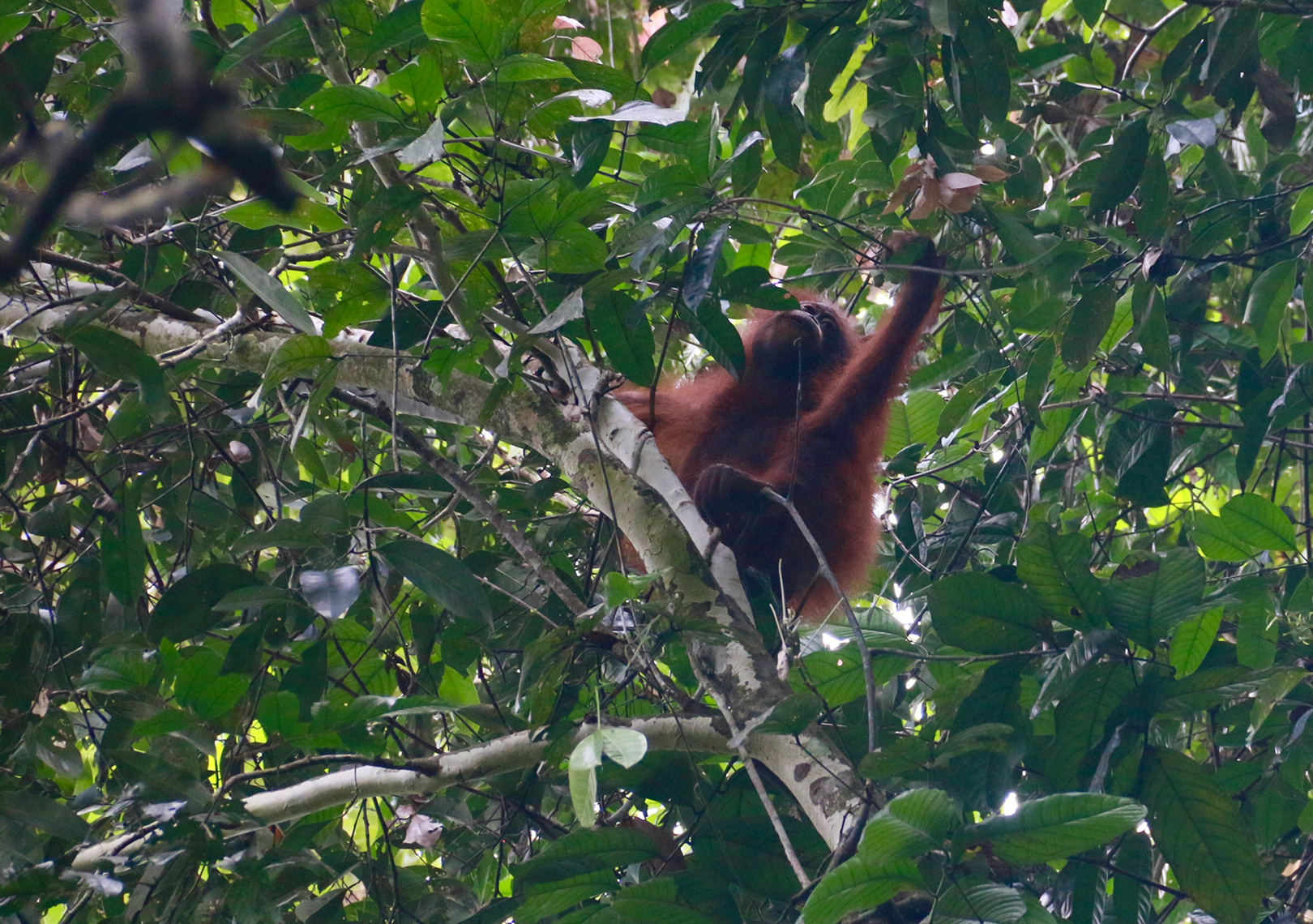
Seeing an orang-utan in the wild is, for many people, a powerful moment. They move with a kind of quiet authority, as though they carry the forest with them. In Malaysian Borneo, particularly in places like Sepilok and the broader protected corridors stretching across Sabah, encounters tend to unfold according to natural rhythms rather than strict viewing patterns.
You might look up during a walk and notice a flash of rust-coloured fur moving high above. Or you might hear branches shifting long before you see anything at all. Sometimes an orang-utan settles into a nest for the afternoon and barely stirs. Other times you’ll catch one swinging effortlessly from tree to tree, reminding you just how well adapted they are to this layered, vertical world.
What makes these encounters special isn’t proximity. It’s the sense that you’re witnessing a creature still following its own internal map — feeding, travelling, resting — with no need to perform for anyone.
The quiet drama of pygmy elephants along winding rivers
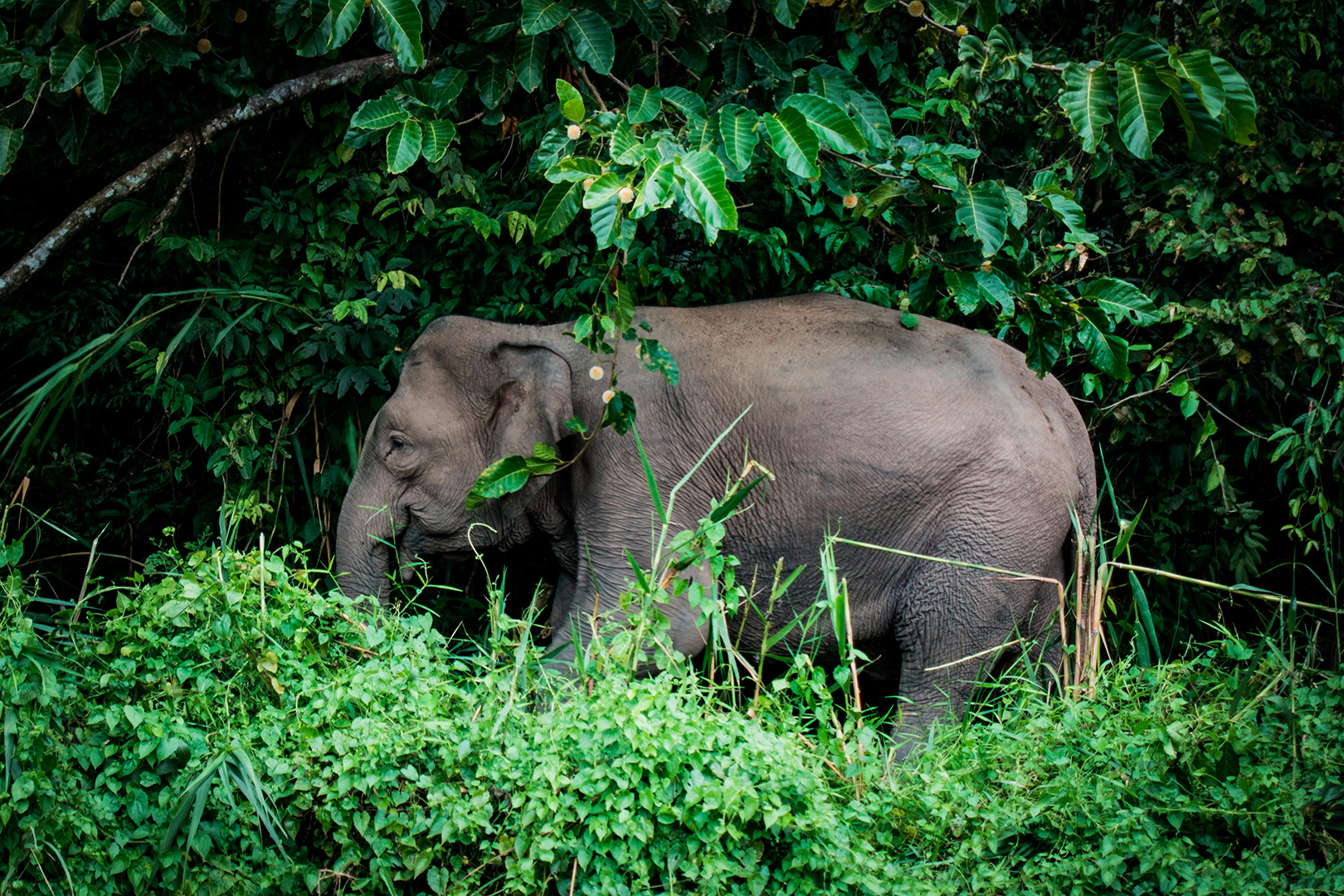
Malaysian Borneo is the only place where you can see Bornean pygmy elephants, and even then, you have to be patient. They tend to stay close to riverbanks or hidden in the forests that surround them, appearing suddenly in family groups that look surprisingly gentle for their size.
If you travel along the Kinabatangan River at dawn, you might spot them grazing near the water, their movements slow and almost thoughtful. At other times, especially during certain seasons, entire herds drift closer to the river’s edge, giving travellers a chance to watch them from a respectful distance.
There’s something strangely moving about these encounters. Maybe it’s the scale — elephants framed by ancient rainforest — or perhaps it’s the knowledge that this subspecies exists nowhere else. Whatever it is, it’s one of those moments that you tend to replay in your head long after the journey ends.
Night walks that reveal a completely different world
Once the sun sets, Malaysian Borneo changes character entirely. The forest becomes louder, brighter in places, and oddly more kinetic. Night walks in Borneo are unlike anything you experience in most of Asia — partly because of the extraordinary mix of reptiles, amphibians, and nocturnal mammals that emerge after dark.
Frogs call from hidden pools. Geckos scuttle across tree trunks. Occasionally, if you’re lucky, you might spot a flying squirrel launching itself into the air or a civet weaving between branches. But the real stars of the night are often the amphibians and reptiles found only in Borneo: vibrantly coloured frogs, beautifully patterned snakes, and lizards that blend almost magically into the forest.
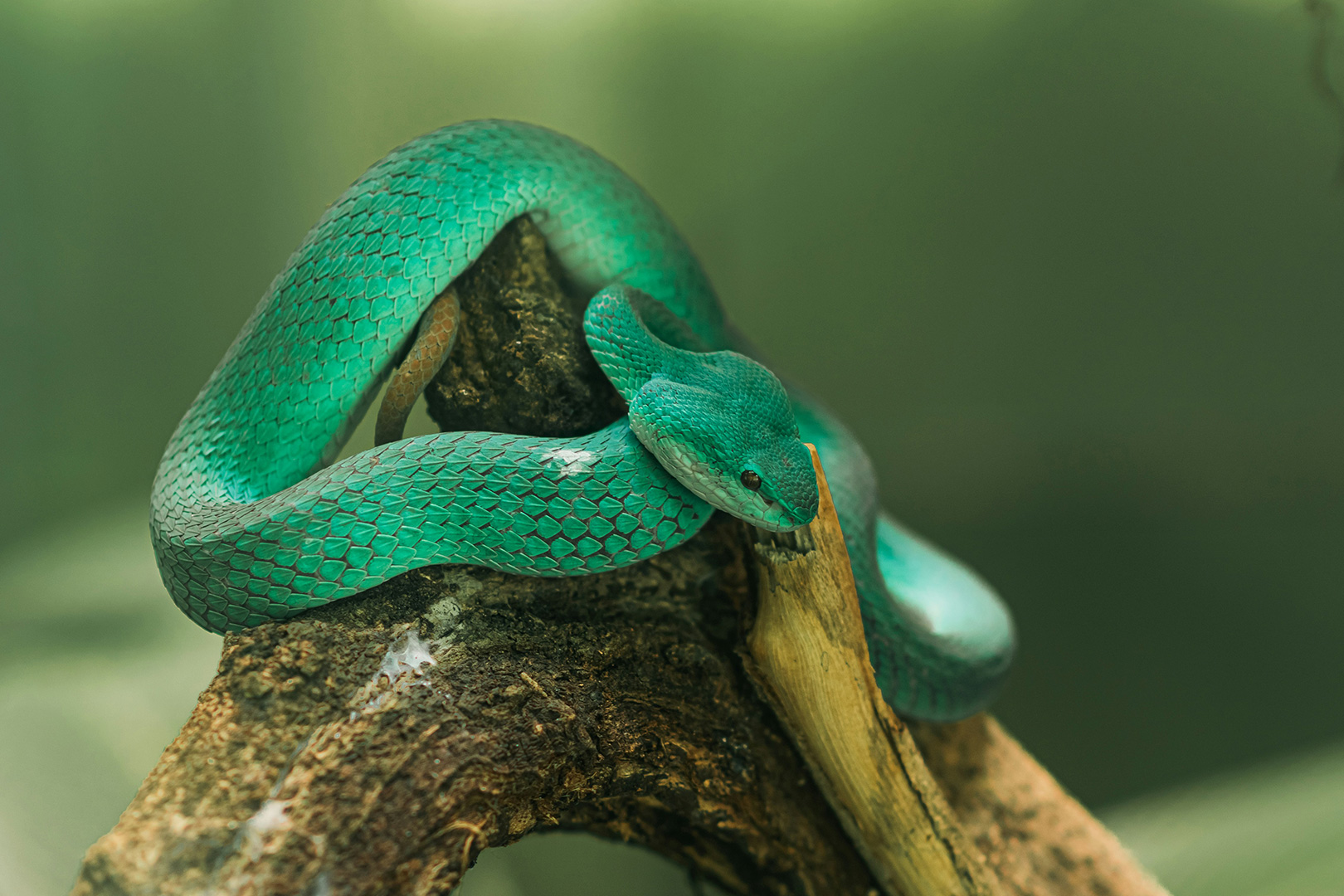
Guides who specialise in these night explorations often point out species you would never notice alone — the delicate curve of a tree frog perched on a leaf or the stillness of a pit viper resting on a branch. These experiences feel genuinely unique to Borneo because few places support such concentrated biodiversity in so many forms.
The deep forest experience at deramakot
Some wildlife encounters require you to go further, into forests that feel almost untouched. Deramakot Forest Reserve is one of those places — a region managed with such care that biodiversity thrives in ways visitors don’t always expect.
Here, the experience isn’t about one specific species. It’s the overall sense that anything might appear: sun bears, wild cats, hornbills, or creatures so shy that you could walk right past them without noticing. Deramakot is also known for its night drives, which offer sightings of nocturnal mammals that rarely appear elsewhere.
The unpredictability is part of the appeal. You arrive without expectations, and the forest decides what you see. That, in itself, feels like an experience unique to Malaysian Borneo — the sense that the land still dictates the terms of its encounters.
Birdlife that only thrives in Borneo’s layered rainforest
Birdwatchers often describe Borneo as one of the most rewarding places they’ve ever visited, and it’s not difficult to understand why. The mix of lowland rainforest, riverine habitat, and mist-covered hills creates an ideal environment for species that appear nowhere else.
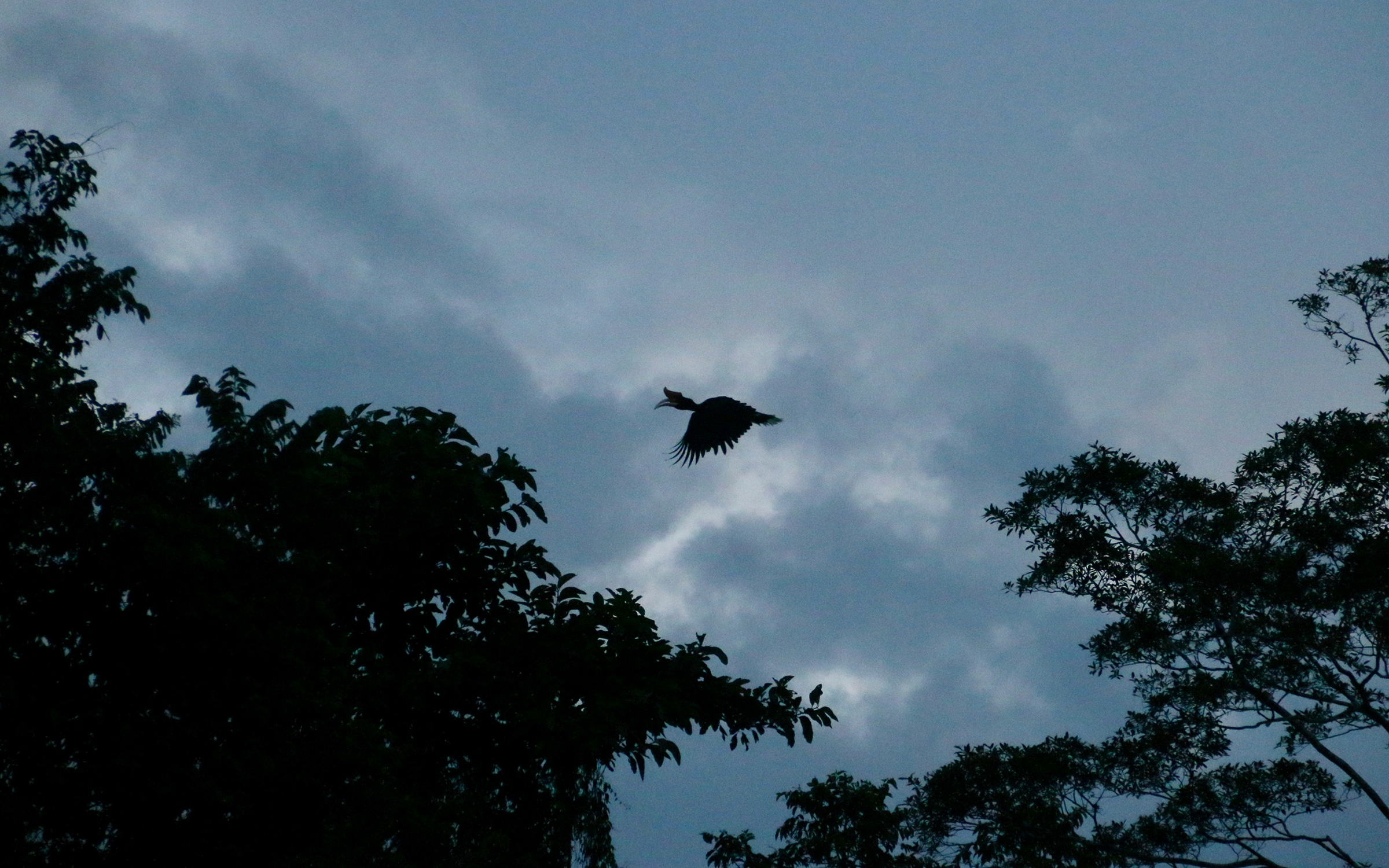
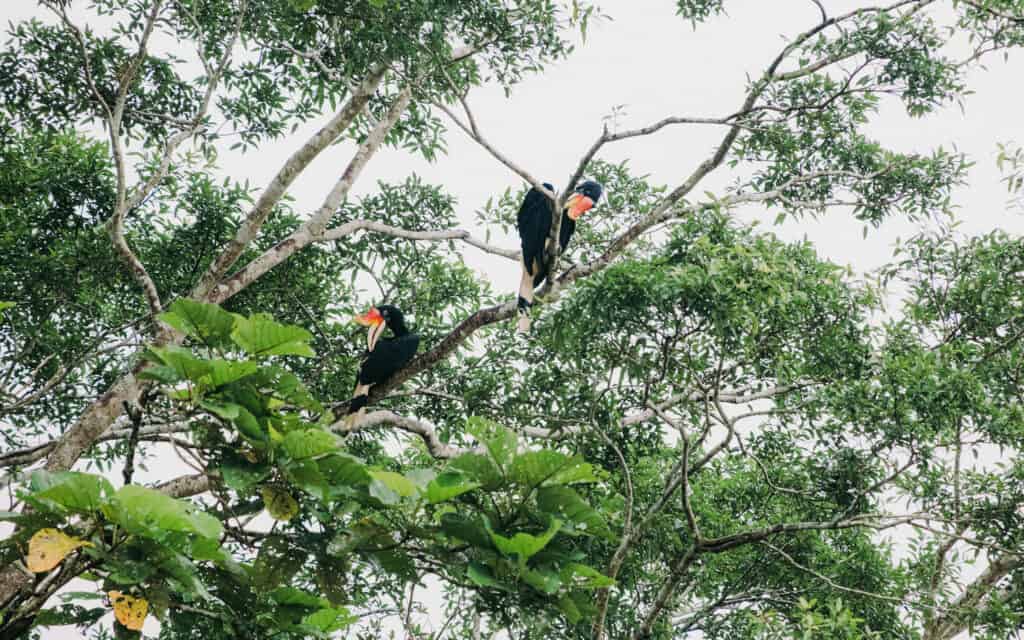
Hornbills, with their unmistakable silhouettes, often glide overhead in small groups, their wings creating a deep, rhythmic whoosh that feels almost prehistoric. Kingfishers flash blue and orange across the water. And deeper within the forest, specialists may help travellers spot rarer species — broadbills, pittas, and other birds that have evolved specifically with Borneo’s habitat in mind.
It’s the diversity and the way species adapt to very particular niches that set Borneo apart. You begin to notice how each bird belongs to a specific layer of the forest: canopy, mid-level, understorey, river edge. It makes the experience richer, more textured.
The river experience: a living corridor of wildlife
Rivers in Malaysian Borneo aren’t just scenic features. They’re lifelines that support complex ecosystems, allowing wildlife to move between feeding grounds, resting areas, and distant sections of forest. Travelling along these waterways — especially the Kinabatangan — often feels like stepping into a wildlife film, except quieter and more intimate.
Crocodiles bask along the banks. Proboscis monkeys gather in the trees with their distinctive noses and pot-bellied silhouettes. Macaques socialise noisily, while hornbills fly across the canopy. Every bend in the river offers something new, and the variety of species often surprises first-time visitors.
What makes this experience uniquely Bornean is the feeling that the river connects everything — mammals, birds, reptiles, and people — into one long, flowing habitat.
Reptiles and amphibians: a surprising depth of diversity
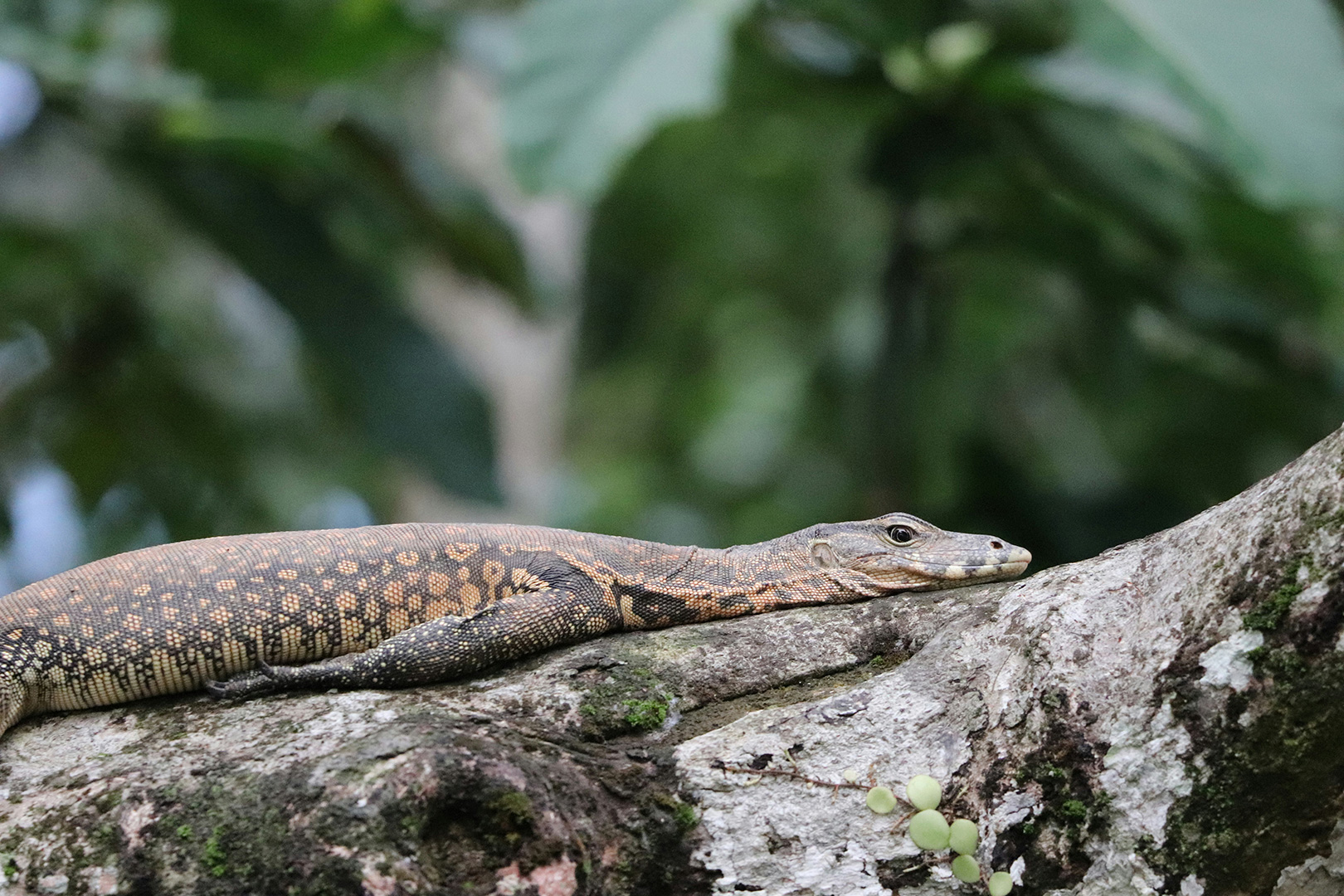
Most travellers arrive in Borneo expecting orang-utans and elephants, but many leave talking about the reptiles and amphibians. The diversity here is so specific to the island that even seasoned naturalists are often amazed by the variety.
Bright green tree frogs with almost translucent skin. Small, jewel-coloured geckos. Snakes that blend into the leaf litter so well they seem to disappear when you blink. Some species are endemic to narrow regions, appearing in only a handful of locations.
These encounters require patience and the right conditions — usually guided night walks, which allow you to experience the forest at its most alive. It’s an entirely different side of Malaysian Borneo and one that feels almost hidden from everyday view.
Forest behaviours you won’t find anywhere else
It isn’t only the species that make Borneo unique. It’s also the behaviours that emerge in a landscape this rich and interconnected.
You might see long-tailed macaques forming complex social groups along the river. Or hear gibbons calling at dawn with a clarity that seems to echo across the canopy. Orang-utans make sleeping nests high in the trees, sometimes crafting new ones each night. Even the smaller creatures — insects, birds, reptiles — follow patterns influenced by the rhythms of the forest.
These behavioural insights turn ordinary sightings into something more meaningful. You’re not just looking at wildlife; you’re seeing how these creatures live.
The sense of discovery that defines a Borneo journey
What ties all these experiences together isn’t just rarity or biodiversity. It’s the sense of discovery — that feeling of entering a world that doesn’t rearrange itself for visitors. Wildlife appears when it chooses to. Landscapes shift subtly with light and weather. Even the quiet moments, when nothing seems to be happening, carry a kind of promise.
In a way, Malaysian Borneo encourages travellers to slow down. To look more carefully. To move at the pace of the forest rather than the pace of an itinerary. And the result is something difficult to describe but easy to feel — a deeper connection to a place that still breathes with its own rhythm.
Wildlife experiences here aren’t polished or predictable. They’re raw, alive, and shaped by ecosystems that have developed over millions of years. And that’s what makes them unforgettable.
Keep Exploring Malaysia
-
 Deep in the Jungle of Sarawak
-
 The Must-Visit Places in Malaysia
-
 Why Malaysia is one of the most underrated destinations for wildlife holidays
-
 Sabah Upgrades Its Trails: A New Wave of Ecotourism on Borneo in 2025-2026
-
 Why Malaysian Borneo remains one of Southeast Asia’s last true wildlife frontiers
-
 Global Meet 2025: Travel inspiration and a glimpse toward Visit Malaysia 2026
Stay Updated on Malaysia